Protein continues to dominate menu innovation, but adding another premium protein isn’t the only way to meet guest demand.
Some of the best menu ideas don’t come from adding another ingredient—they come from looking at a familiar one differently. Long associated with breakfast, eggs have far more potential than many operators give them credit for. Used strategically, they can elevate familiar dishes, stretch higher-cost proteins, and create new menu opportunities across lunch, dinner, snacks, and small plates—all without expanding inventory.
Eggs are versatile, profitable, and packed with potential. Here’s how operators are using them to build value, simplify prep, and keep menus fresh across every daypart.
WHY EGGS DESERVE A FRESH LOOK
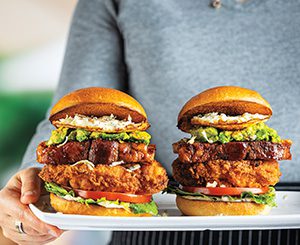
The best uses for eggs often don’t put them at the center of the plate. A fried egg transforms a burger into a signature item. A jammy egg adds richness and texture to grain bowls and ramen. A grated cured yolk delivers concentrated umami as a finishing ingredient, creating the richness guests often associate with aged cheese. The result isn’t just another egg dish. It’s a more satisfying plate with greater perceived value, built from an ingredient already working in the kitchen.
ONE PREP, MULTIPLE MENU OPPORTUNITIES
Few ingredients reward batch prep like eggs. Marinate a batch of jammy eggs on Monday, and they can top ramen bowls Tuesday, grain bowls Wednesday, fill the grab-and-go case Thursday, and finish catering trays Friday. One preparation can support multiple menu applications while creating consistency across dishes. That flexibility also aligns with one of the fastest-growing occasions in foodservice: snacking. According to Datassential, snacks were the fastest-growing restaurant daypart last year, with 58% of guests citing a quick bite as their reason for visiting. Hard-cooked eggs offer a protein-forward grab-and-go option with minimal additional labor, while deviled eggs, Scotch eggs, and other shareable small plates give operators new ways to build snack and bar menus from an ingredient already in rotation.
FAMILIAR TECHNIQUES, FRESH INSPIRATION
Some of the most exciting egg applications today build on techniques chefs already know. Cured yolks are one example gaining momentum. After being salt-cured, dried, and grated, they deliver concentrated umami and visual appeal while offering an economical alternative to some finishing cheeses. Datassential reports cured yolks now appear on 0.5% of menus, up 71% over the past four years. Nearly half of consumers have yet to try them, but 61% of those who have say they love them, making cured yolks a low-risk way to introduce something unexpected.
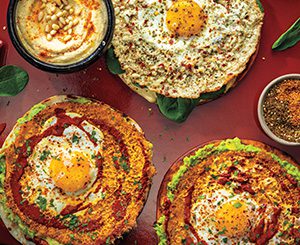
Global preparations offer equally approachable inspiration. Japanese shoyu eggs, Turkish eggs with whipped yogurt and chili butter, and Korean mayak eggs all rely on familiar techniques—boiling, poaching, marinating—but introduce new flavors and presentations that feel fresh to guests without adding significant operational complexity. They’re ideal for seasonal features, LTOs, or refreshing familiar menu items with a different flavor perspective. Deviled eggs are evolving, too. Instead of serving a single classic version, operators are offering rotating flights topped with ingredients like chili crisp, smoked salmon, bacon jam, pickled vegetables, or everything seasoning. It’s an inexpensive shareable that’s easy to refresh seasonally while encouraging guests to explore multiple flavors in a single order.